

Okay, so check this out—I’ve been messing with cold storage for years. Wow! At first I thought seed phrases were fine. They worked, and everyone used them. But then I lost a phrase on a sticky note and nearly lost a chunk of crypto. My instinct said: there’s gotta be a better way. Seriously?
Here’s the thing. Seed phrases are powerful, but they’re also a pain. Short sentences are easy to lose. Medium ones get miscopied. Longer ones become a project. People hide paper backups in safety deposit boxes, under floorboards, or with trusted friends. None of that scales neatly for the average user who wants something that feels like a normal wallet in their pocket.
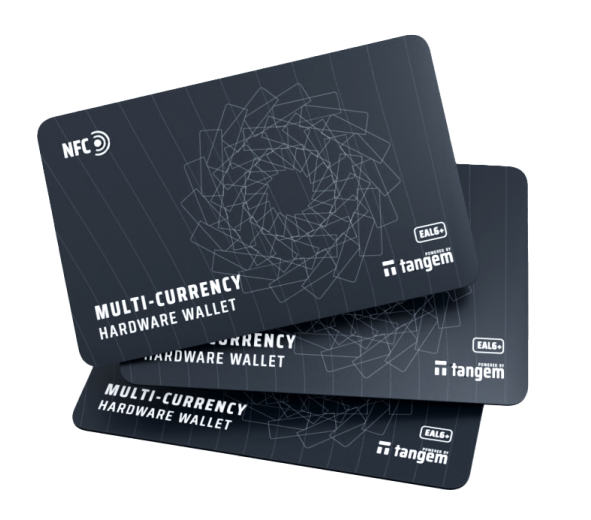
So enter smart-card hardware wallets. They look small. They feel like credit cards. They behave more like something you’d slap in your wallet and forget about until you need it. On one hand, that low-friction comfort is fantastic. On the other, I worried about lock-in and single-point failures. Initially I thought physical cards were gimmicks, but then a few practical advantages changed my mind.
What smart-card wallets actually solve
They remove reliance on long, memorized or written seed phrases. They use secure elements to store private keys inside the card. Short sentence. Less room for human error. Medium sentence explaining more: because the private key never leaves the secure chip, you don’t have to babysit a paper backup the way you would a 12-word phrase. Longer thought: which means for people who are not hardcore into cryptography but still want to hold their own keys, this is a huge UX win because it translates to fewer catastrophic mistakes and fewer calls to frantic support channels.
My bias here is obvious—I’m fond of things that “just work.” I’m biased, but good UX matters more than many crypto purists admit. Hmm… something felt off about most cold-storage stories. They assume discipline. Most people don’t have that discipline.
Security trade-offs: be honest about risks
Short note: nothing is perfectly safe. Medium sentence: smart-card wallets reduce some risks but introduce others, such as physical theft or loss of the card. Longer analysis: on one hand you eliminate the risk of a copied seed phrase, but on the other, you now need good handling practices—like treating the card like a passport or a key fob—because if someone steals the card plus your phone, and you haven’t set up PINs or secondary protections, you’ve created a new attack surface.
On the technical side, these cards typically house secure elements that are tamper-resistant. They sign transactions internally. Your private key never leaves. That means backups are handled differently—either by provisioning multiple cards at setup, using a paired recovery card stored elsewhere, or by integrating with a recovery service. I tried the multi-card provisioning once. It worked, though the setup felt a little clunky at first.
There’s also the question of open vs closed ecosystems. Some cards are very closed—firmware you can’t audit. Others lean toward open standards. I’m not 100% sure which is “best” in every context, but transparency is a useful signal. If a vendor is opaque about key management, that bugs me.
Multi-currency support—does it actually work?
Yes, most modern smart-card wallets support multiple chains. Short line. Mostly. Medium: they handle common families like Bitcoin, Ethereum, and ERC-20 tokens, and many extend support to Solana, Avalanche, and more through companion apps. Longer thought: what matters is how the card integrates with the ecosystem—wallet apps, exchanges, and dapps—because a card that signs Bitcoin but can’t interact well with your NFT marketplace is less useful to collectors, while developers want consistent APIs so different wallets can plug in without a rewrite.
One practical success story: I used a smart-card solution for an account with holdings across BTC, ETH, and some stablecoins. The card allowed me to sign transactions for each chain using the same device, with minimal fumbling. It felt like carrying one key that worked for multiple locks. That simplicity lowers the barrier to self-custody for people who otherwise would rely on custodial apps.
Recovery models—how do you avoid single points of failure?
This is the real rub. People assume “no seed phrase” equals “no recovery problem.” Not true. Short: you still need a plan. Medium: some smart-card approaches let you create multiple cards at setup, so you can stash a backup somewhere. Others offer a recoverable on-chain backup using a social recovery mechanism or a threshold backup split across several parties. Longer analysis: the ideal system balances convenience with survivability—if your card dies, you should have a secure, practical way to get access back without exposing your key to unnecessary risk.
I’m not thrilled by complicated recovery that relies on centralized services. I prefer schemes where the recovery factors are distributed—like giving fragments to trusted family members or using a hardware-enforced split that needs multiple cards or devices to reconstruct the key. That way a thief can’t just swipe one element and drain everything.
Practical tips for adopting a smart-card wallet
Short tip: think like a traveler. Medium: treat the card as both passport and cash. Keep one backup in a separate secure location. Longer: when you set up the card, test recovery immediately. Make sure you understand the card’s PIN policy, lockout thresholds, and whether it supports firmware updates. Also check what happens if the vendor disappears—do you still have a path to recover your funds, or are you stuck?
Another tip—use a card that works well with the mobile and desktop apps you already use. If you prefer mobile-first interaction, make sure pairing is seamless. If you’re an advanced user, check support for hardware wallets in command-line tools or open-source wallets. Oh, and by the way… register the card serial somewhere safe. It helps when interfacing with advanced support or when restoring settings.
Why tangem fits this space
I’ve tried a few brands. One that kept coming up in my notes is tangem. Short thought: simple and tangible. Medium: Tangem’s cards feel like a direct replacement for a seed phrase if you want to avoid the whole paper tango. Longer reflection: the product line focuses on secure elements embedded in a card form factor, with a lightweight UX that appeals to both beginners and seasoned holders, and they support a broad set of chains through compatible wallet apps and integrations.
I’ll be honest: I’m biased toward hardware that minimizes user friction while preserving key security. Tangem does that well for many people. That said, it’s not a magic bullet. Consider your threat model. If you’re storing multi-million-dollar positions, combine approaches. For everyday users—people who want a safer, friendlier way to self-custody—the card model is compelling.
Frequently asked questions
Can a smart-card wallet be hacked remotely?
Short answer: very unlikely. Medium: secure elements are designed to resist remote extraction because the private key never leaves the chip. Longer: remote hacks usually target companion apps or mobile devices, not the card’s chip itself. Protect your phone and apps with strong PINs, biometrics, and keep firmware up to date.
What happens if I lose my card?
Depends on your setup. Short: you need a backup plan. Medium: if you created additional cards at setup, use those. Some setups allow social recovery or distributed backups. Longer: if you didn’t provision a backup and the vendor’s recovery options are limited, losing the card can mean losing access—so plan ahead and maybe consider multiple cards or a secure secondary recovery method.
Are these cards good for NFTs and DeFi?
Yes, generally. Short: they sign transactions like any hardware wallet. Medium: ensure the card and its wallet app support the specific tokens and dapps you use. Longer: some DeFi platforms require custom integrations; check compatibility before committing large positions.
So where does that leave us? My first feeling was skepticism. Then, as I used smart-card wallets more, I had a few aha moments about usability and risk reduction. On the one hand, smart cards simplify things a lot. On the other hand, they change the nature of your backup game. I’m still not 100% sold on any single approach for all users, but for many people—especially those who want a low-friction step into self-custody—this is a realistic, secure, and user-friendly path worth trying. Hmm… I’m leaning toward keeping one in my wallet. You might want to do the same.